The Infallible Strategy To Win Younger Generations with DOOH
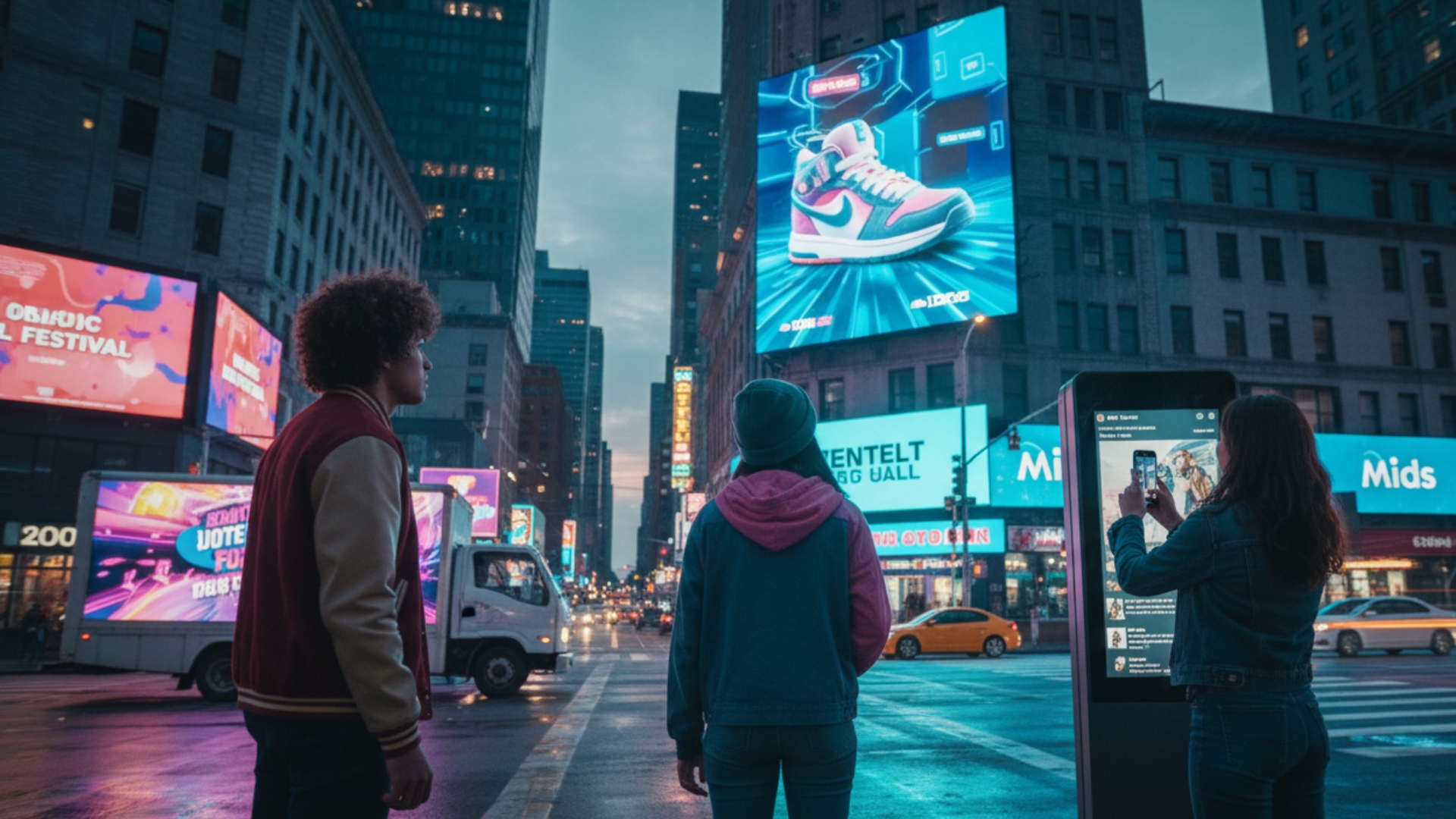
If you are in the business of marketing for children whether it’s books, toys, fashion, school supplies, or educational software you are fighting a war on two fronts. You have to win the heart of the child and the wallet of the parent.
Teenagers in the US are spending roughly $360 billion right now, and this number is expected to grow significantly in the coming years. They are often trendsetters, and understanding their preferences can help brands appear innovative and appealing.
It is the classic marketing paradox: If your ad is too childish, the parent tunes it out as noise. If it’s too “adult,” the kid tunes it out as boring.
A 6 year old, a 12 year old, and a 17 year old might all influence household spending, but they are driven by completely different psychological forces. What works for one age group can repel another.
Staying on top of trends is essential for engaging younger audiences, as their interests in fashion, music, gadgets, and culture shift rapidly. Both children and parents are consumers whose preferences and behaviors must be understood to create effective campaigns.
The solution is to master the Dual-Target Strategy. These marketing strategies are designed to reach both children and parents effectively. Marketing strategies must appeal to both the child’s interests and the parent’s concerns regarding safety, educational value, and privacy. And the most powerful canvas for this is Digital Out-of-Home (DOOH).
Unlike a phone screen where you can only target one person at a time, a digital billboard is a shared experience. It’s the only medium where the lobbyist (the kid) and the senator (the parent) are staring at the exact same message, usually while stuck in traffic on the way to school. Parents ultimately make the final purchase decisions, so successful marketing strategies should target both children and their guardians.
Here is your guide to winning every age group, from the playground to the prom, and how to buy the media to make it happen. In 2026, effective marketing for children emphasizes responsive engagement, authenticity, and compliance with ethical standards.
Phase 1: Ages 5-10
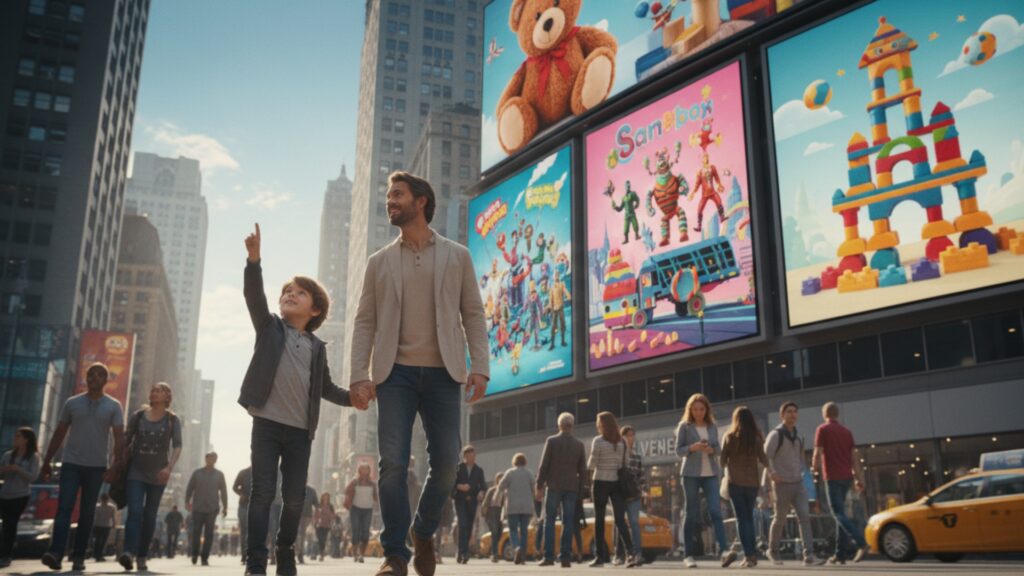
When The Urge Is Instant
At this stage, the reaction is immediate and emotional. The urge is simple: “I want that.”
Kids process visuals faster than language and respond instinctively to color, motion, and characters they recognize. This is where pester power is most raw.
Making the Screen Impossible to Ignore
OOH creative needs to dominate the visual field. Subtlety doesn’t work. If your ad looks like a poster, it will be ignored. High-impact formats are what stop attention. Paramount’s SpongeBob campaign in Los Angeles worked because SpongeBob didn’t sit politely inside the screen; he appeared to burst out of it. That kind of visual interruption matters.
You also have almost no time. Parents are moving. Kids are distracted. Your idea has about two seconds to communicate “fun” to the child. Any copy that exists should be aimed at the parent, not the kid. Simple color blocks and clear characters outperform detailed scenes every time.
What Parents Are Actually Buying
Parents are buying peace. Occupation. Education disguised as entertainment. A visual of a chaotic science kit paired with a line like “Keeps them occupied for hours (and it’s educational)” works because it speaks to both audiences at once.
Where Attention Naturally Clusters
Placement matters just as much as creative. The most effective screens sit along the school run and in weekend family zones like parks, zoos, and family-friendly dining districts.
Phase 2: Ages 11-14
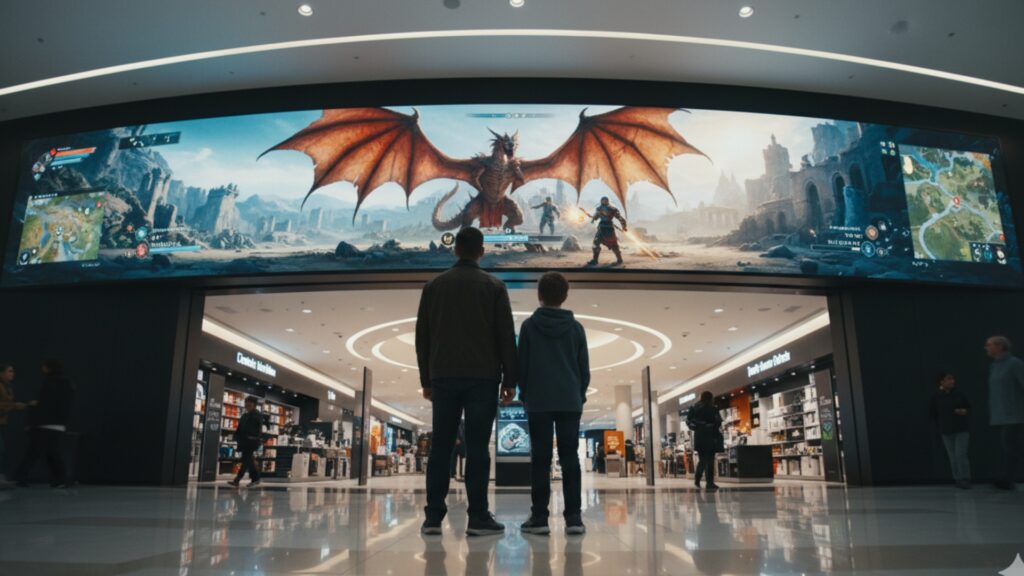
The Fear of Being Left Out
This is the most fragile and misunderstood phase. The vibe shifts from desire to comparison: “Everyone else has one.”
Belonging becomes the driver, and fear of embarrassment is stronger than excitement.
Showing Proof Instead Of Promises
Middle schoolers are too old for toys but not yet independent. They care deeply about what’s cool and will instantly reject anything that feels try-hard or outdated. Showing a smiling kid holding a product rarely works here. Instead, show the outcome. Gameplay instead of the console. Sneakers in motion instead of posed feet. Let the product speak through use.
Language is dangerous territory. Slang expires quickly and backfires even faster. Visual aesthetics are safer and more effective: high contrast, motion, bright tones, and slightly edgy design cues signal relevance without trying too hard.
Reassuring the Adult in the Room
Parents, meanwhile, are thinking about value and longevity. They want to know the thing won’t break, won’t go out of style in a month, and won’t feel like wasted money. A line like “Built to survive the school year” bridges both worlds: status for the kid, durability for the parent.
Catching Them in Social Spaces
The best environments to reach this group are where they congregate and linger: malls, cinema lobbies, and fast-food chains. Timing matters too. Friday afternoons and Saturday evenings work because kids are with friends, spotting ads together, and reinforcing each other’s opinions in real time.
Phase 3: Ages 15-18
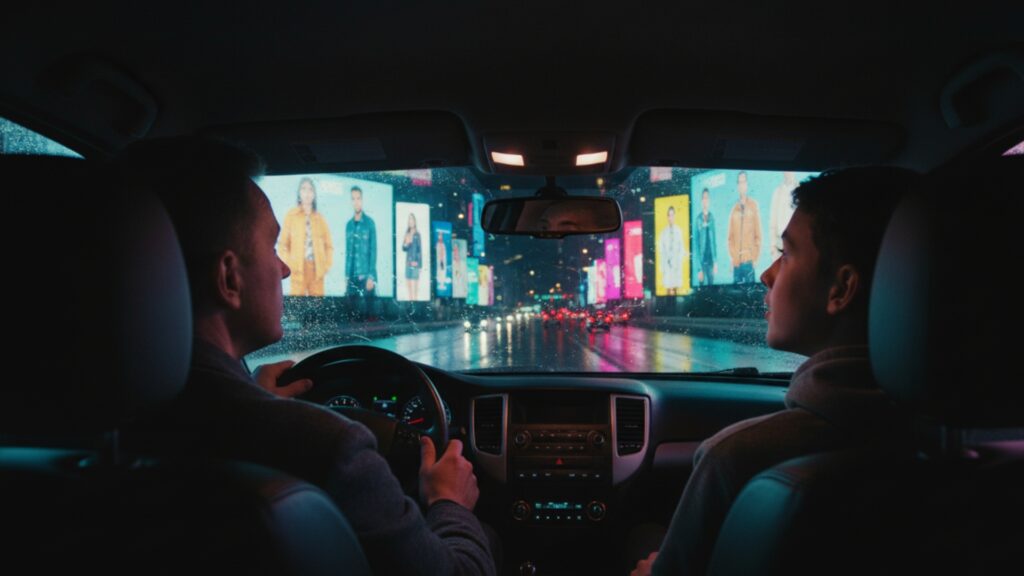
Identity Takes the Wheel
By high school, the mindset changes again and becomes declarative: “This is who I am.”
These audiences are media-literate, skeptical, and highly sensitive to anything that feels fake.
Designing for Aspiration, Not Approval
At this stage, OOH creative should feel aspirational and adult. Whether it’s a first car, tech, fashion, or education, the brand needs to signal confidence and authenticity. Over-explaining kills credibility. Clean visuals, minimal copy, and a strong point of view go further than hype.
The best-performing executions often create an “Instagrammable” moment, not because they ask for it, but because they earn it. A bold text-only statement or a striking 3D object will outperform stock imagery of smiling students every time. Teens care a lot about aesthetics, so make sure to use multiple creatives to reach every friend group.
Balancing Freedom and Reassurance
Parents are now in launch mode. Their concerns revolve around safety, independence, and setting their child up for the next phase of life. Messaging that balances freedom with reassurance works well. A car shot like a music video paired with “The freedom they want. The safety you need.” lands because it speaks to both sides honestly.
Reaching Them on the Move
Transit environments become more important here: bus shelters, train stations, and areas around high schools. Event-based targeting also works well. Concerts and sports venues are places where identity, aspiration, and peer signalling peak.
How to Execute
You might think, “I can’t afford a nationwide campaign targeting all these locations.” The good news: you don’t have to.
Marketing to families and children with DOOH is about precision.
Target the Right Screens
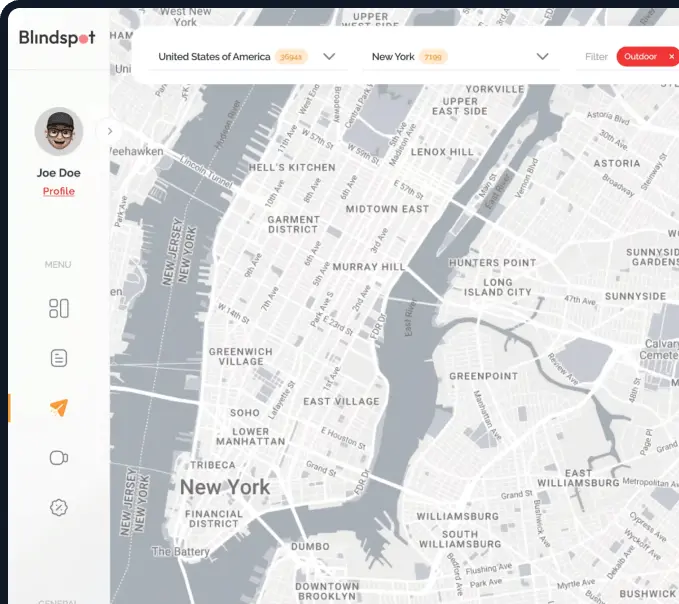
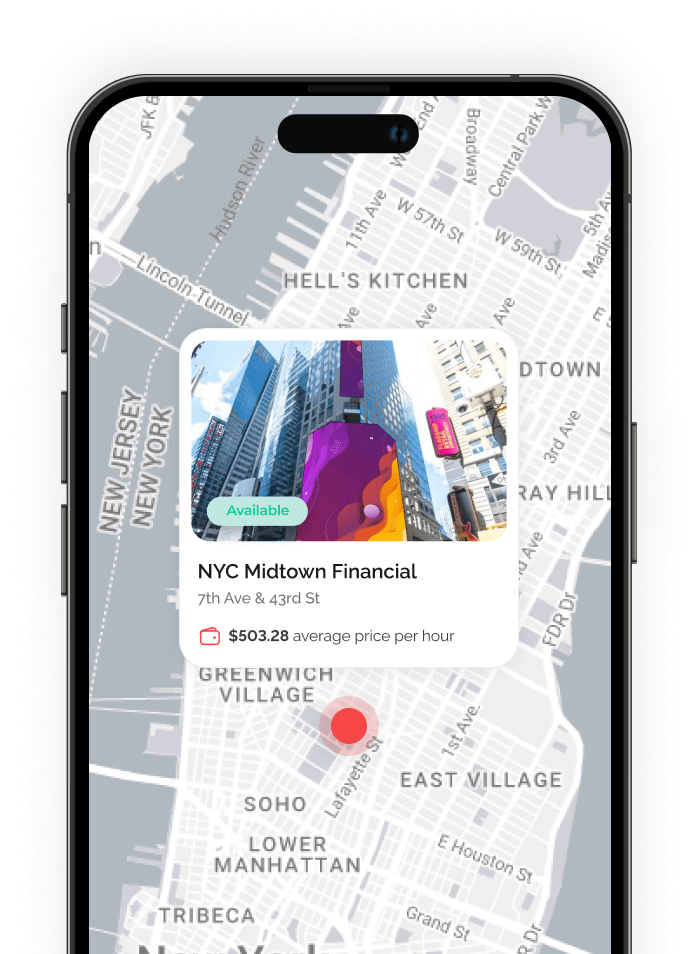
Families don’t move randomly, and neither should your ads. Blindspot gives access to over 2.5 million digital screens and lets you filter by location.
For younger kids, focus on parks, schools, and family-friendly areas.
For teens, prioritize downtown districts, transit hubs, and social hangouts.
Optimize Your Budget (The “Nap Time” Savings)
Don’t pay for ads when your audience isn’t paying attention. Blindspot allows you to control your schedule down to the hour, helping advertisers optimize budgets by 60% or more.
Strategy: Turn your ads off at 11:00 AM (when kids are in class) and blast them at their pickup time. By focusing spend during the windows that matter most, you make every impression more valuable.
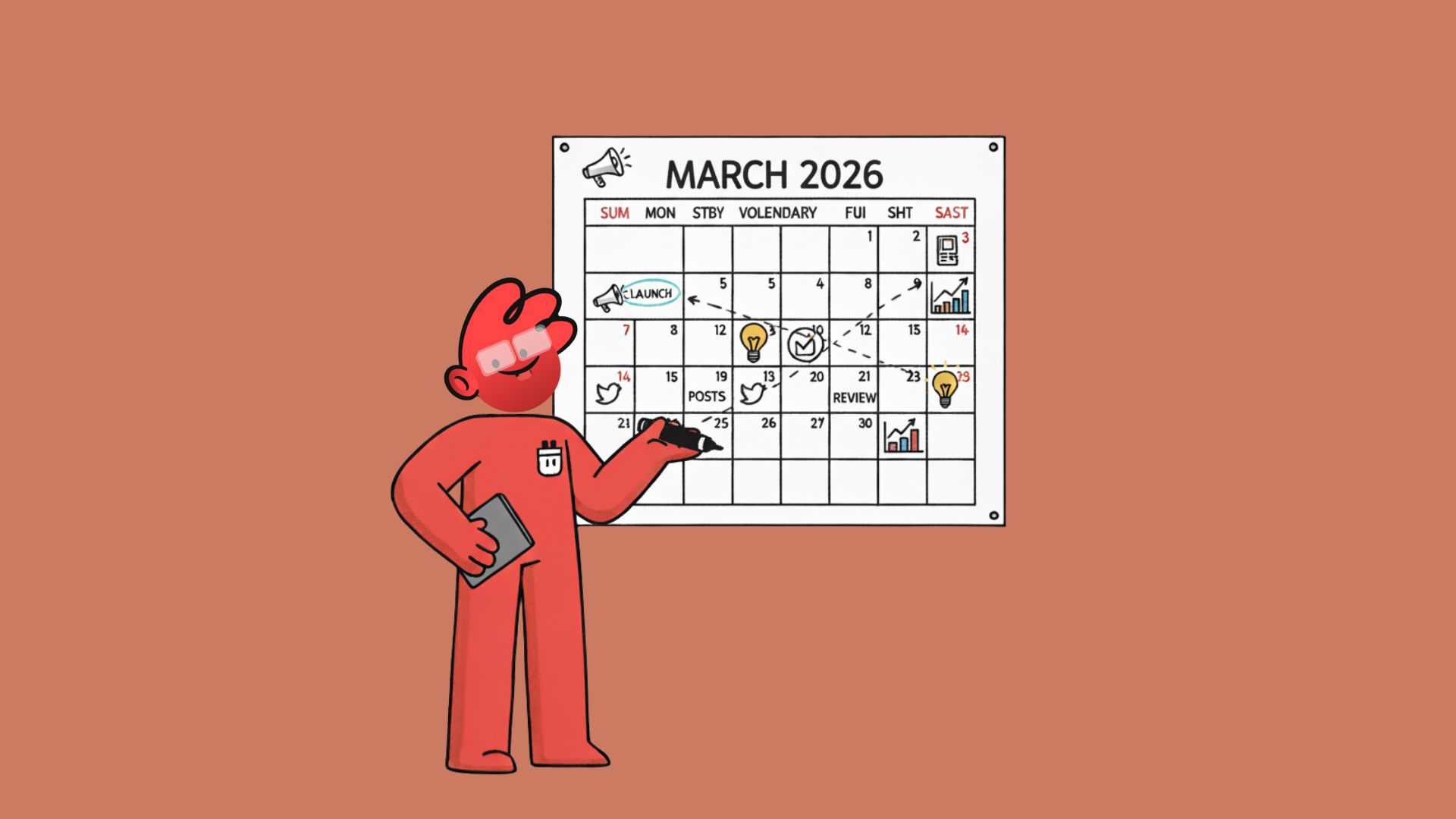
Life changes fast, and your campaigns can too. Exam week? Highlight study aids. Adjust your campaigns so your messaging always matches what families are actually experiencing.
Marketing to families is a balancing act: you need to be the fun brand for the kid and the responsible choice for the parent. DOOH creates a shared moment where that negotiation happens, and Blindspot ensures you only pay for the moments and screens that truly matter.